
What is RDSS and IS 16444? A Smart Meter Compliance Guide
What RDSS and IS 16444 mean for smart metering in India, why they matter for DISCOM tenders, and what makes a smart meter compliant with the national programme.
Enerzolve Smart Grid Team··Smart Grid & Metering·6 min read
What are RDSS and IS 16444?
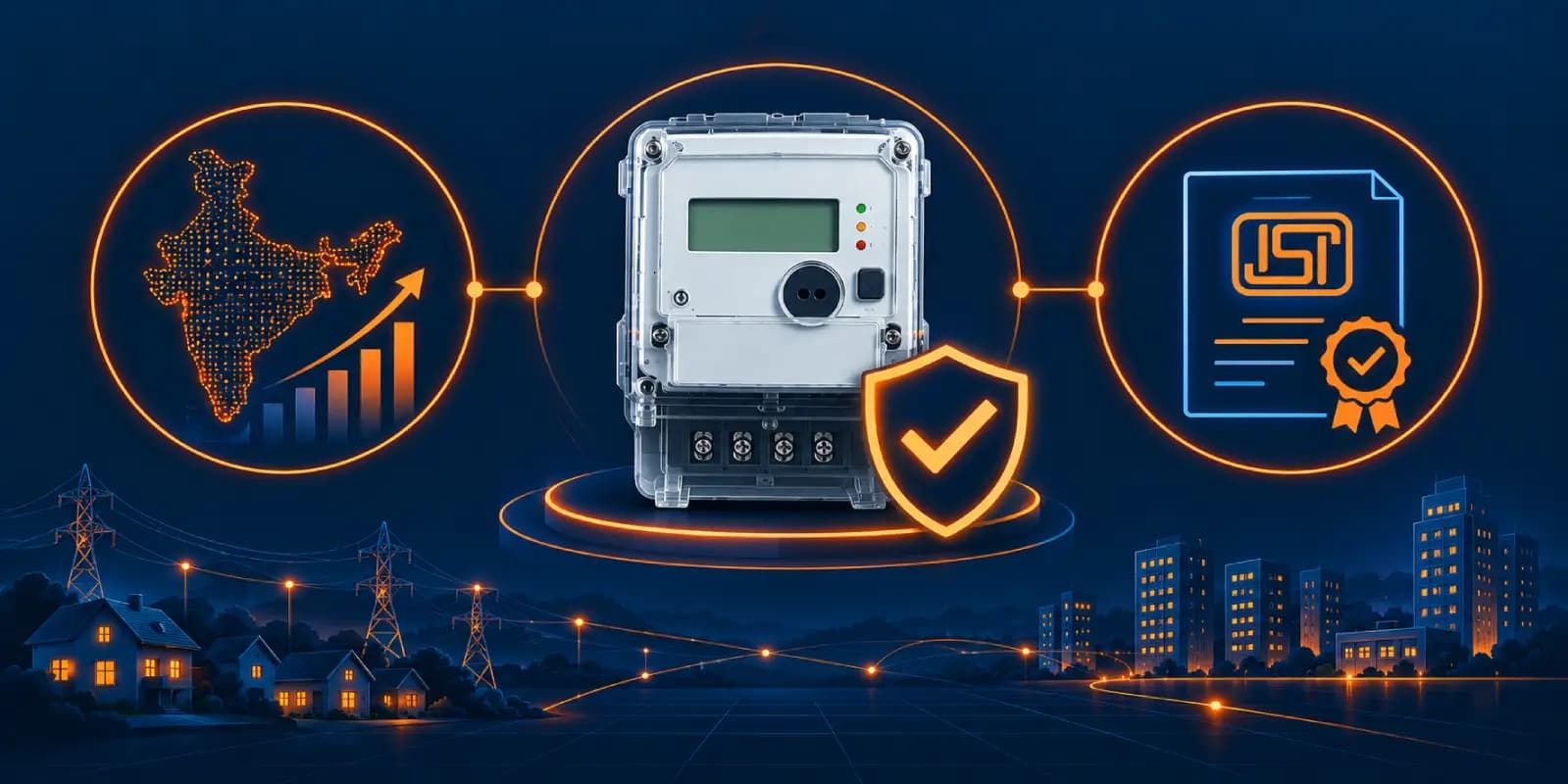
RDSS (the Revamped Distribution Sector Scheme) is the Indian government programme driving the rollout of smart prepaid meters across the country to improve the financial health of distribution utilities. IS 16444 is the Bureau of Indian Standards specification that a smart energy meter must meet to be used in that programme. Put simply: RDSS is the national scheme, and IS 16444 is the standard a meter has to comply with to qualify for it.
For any utility or DISCOM procuring meters, and any manufacturer supplying them, these two together set the rules. This guide explains what each one is, why they matter, and what makes a smart meter compliant.
What is the RDSS scheme?
RDSS is a central government scheme aimed at reducing the AT&C (Aggregate Technical and Commercial) losses that have long weakened India's distribution utilities, and at improving the reliability and quality of power supply. A central pillar of the scheme is the large-scale deployment of smart prepaid meters across consumers, feeders, and distribution transformers.
The logic is direct: accurate, prepaid, remotely managed metering removes estimated billing, curbs theft, improves cash flow, and gives utilities real-time visibility of their networks. RDSS ties funding for utilities to metering and loss-reduction targets, which is why smart metering has become a national priority rather than an optional upgrade.
What is IS 16444?
IS 16444 is the Indian Standard for AC static direct-connected smart energy meters, covering single phase and three phase prepayment and postpayment meters. It defines the technical and functional requirements a smart meter must meet: accuracy, communication, prepaid and postpaid billing behaviour, tariff handling, tamper detection, and the safety and performance criteria the meter must pass in type testing.
In practical terms, IS 16444 is the checklist that separates a compliant smart meter from a non-qualifying one. A meter tested and certified against IS 16444 can be deployed under the national programme; one that is not, cannot.
Why RDSS and IS 16444 matter for utilities
For a DISCOM, compliance is not a technicality, it is the gateway to the whole programme. Meters deployed under RDSS must meet IS 16444, so procurement teams shortlist only compliant, certified products. Choosing a meter that meets the standard protects the utility's eligibility for scheme funding and ensures the metering will actually deliver the loss reduction and billing accuracy the scheme is designed to achieve.
It also de-risks the deployment. A meter built to IS 16444, type-tested in an accredited laboratory, and carrying the right certifications is far less likely to cause field failures, billing disputes, or integration problems down the line.
What makes a smart meter RDSS and IS 16444 compliant?
Compliance rests on a few pillars:
IS 16444 conformance. The meter meets the accuracy class, functional, and performance requirements of the standard, verified through type testing.
Prepaid and postpaid support. RDSS emphasises prepaid metering, so the meter must handle both prepaid and postpaid billing and the tariff structures defined in IS 16444, including time-of-use and time-of-day.
AMI readiness. The meter must function within an advanced metering infrastructure, supporting remote reading, remote connect and disconnect, and two-way communication, not just automated reading.
Type testing and certification. The meter must be tested in an accredited laboratory and carry the certifications that qualify it for deployment.
Interoperability. Open standards such as DLMS/COSEM keep the meter interoperable across systems, which the national programme requires to avoid vendor lock-in.
How Enerzolve meters meet the standard
Enerzolve's smart energy meter is designed for the national programme and qualifies under RDSS. The meters are type-tested in a NABL-accredited laboratory and certified to a broad set of standards, including BIS, ISO 9001, ISO 14001, ISO 27001, and ISO 45001, along with CMMI Level 3, MTCTE, and STQC. Billing follows IS 16444, covering prepaid and postpaid operation, time-of-use and time-of-day tariffs, and net metering.
Because Enerzolve builds the meter together with the advanced metering infrastructure around it, the head end system, meter data management, and analytics, utilities get a compliant meter and a compliant system from one engineering owner, which simplifies deployment under the scheme.
The takeaway
RDSS is the national scheme driving smart prepaid metering across India to cut AT&C losses, and IS 16444 is the standard a meter must meet to qualify for it. For a utility, compliance is the entry ticket: it protects scheme eligibility, de-risks the rollout, and ensures the metering delivers the loss reduction the scheme is built for. A compliant meter means IS 16444 conformance, prepaid and postpaid support, AMI readiness, accredited type testing, and interoperability, ideally delivered as part of an integrated, standards-based AMI platform.
Frequently asked questions
RDSS, the Revamped Distribution Sector Scheme, is an Indian government programme to improve the financial health of distribution utilities by reducing AT&C losses and modernising the network. A central element is the large-scale rollout of smart prepaid meters, with utility funding tied to metering and loss-reduction targets.
IS 16444 is the Bureau of Indian Standards specification for AC static smart energy meters, covering single and three phase prepayment and postpayment meters. It defines the accuracy, communication, billing, tariff, and tamper-detection requirements a smart meter must meet, verified through type testing, to qualify for use in the national programme.
Yes. Smart meters deployed under RDSS must comply with IS 16444. Utilities shortlist only meters that meet the standard and carry the appropriate certifications, because compliance protects their eligibility for the scheme and ensures the metering performs as intended.
IS 16444 defines prepaid and postpaid billing behaviour and tariff structures including time-of-use and time-of-day, along with net metering support. A compliant smart meter must handle these billing modes correctly.
Yes. Enerzolve smart meters qualify under RDSS, are type-tested in a NABL-accredited laboratory, and are certified to standards including BIS, ISO 9001, ISO 14001, ISO 27001, ISO 45001, CMMI Level 3, MTCTE, and STQC, with billing per IS 16444.
Keep reading
What is a BESS? Battery Energy Storage Systems Explained
A BESS is a system of systems. The BMS protects the cells, the PCS converts the power, and the EMS decides what the whole thing should do.
HES vs MDMS: How the AMI Software Layer Works
The HES talks to the meters, the MDMS makes sense of the data. One collects, the other perfects — and a serious AMI rollout needs both.
Grid-Forming vs Grid-Following Inverters (What Grid-Forming Means)
A grid-following inverter is a passenger. A grid-forming inverter can be the driver — and as conventional generation retires, that difference matters more every year.
Ultrasonic vs AMR Water Meters: Which One Fits Your Network?
Accuracy, maintenance, communication, and cost — how the two technologies actually differ, and how to pick per application rather than per vendor.
Planning a metering or power conversion program?
Talk to the engineering team about specifications, standards, and deployment.
Contact Enerzolve