
Blog
Engineering notes on metering, AMI, and power conversion
Practical guides from the team that designs and manufactures the hardware, written to help you specify the right system.
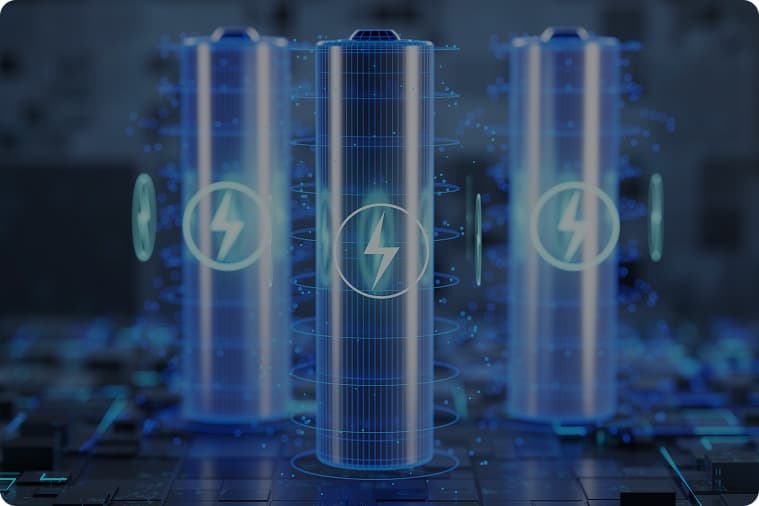
What is a BESS? Battery Energy Storage Systems Explained
A BESS is a system of systems. The BMS protects the cells, the PCS converts the power, and the EMS decides what the whole thing should do.
Read the guide →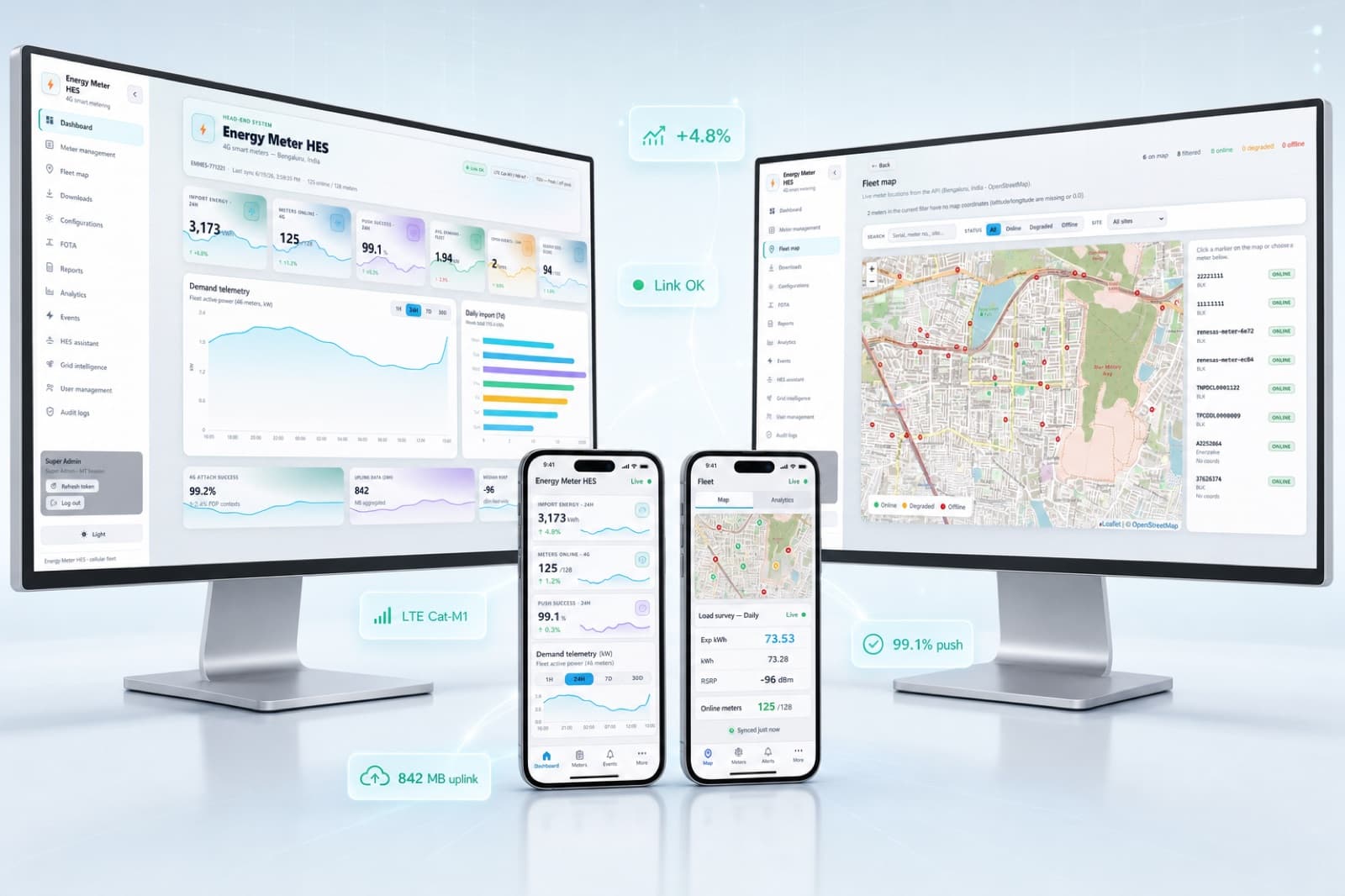
HES vs MDMS: How the AMI Software Layer Works
The HES talks to the meters, the MDMS makes sense of the data. One collects, the other perfects — and a serious AMI rollout needs both.
Read the guide →
Grid-Forming vs Grid-Following Inverters (What Grid-Forming Means)
A grid-following inverter is a passenger. A grid-forming inverter can be the driver — and as conventional generation retires, that difference matters more every year.
Read the guide →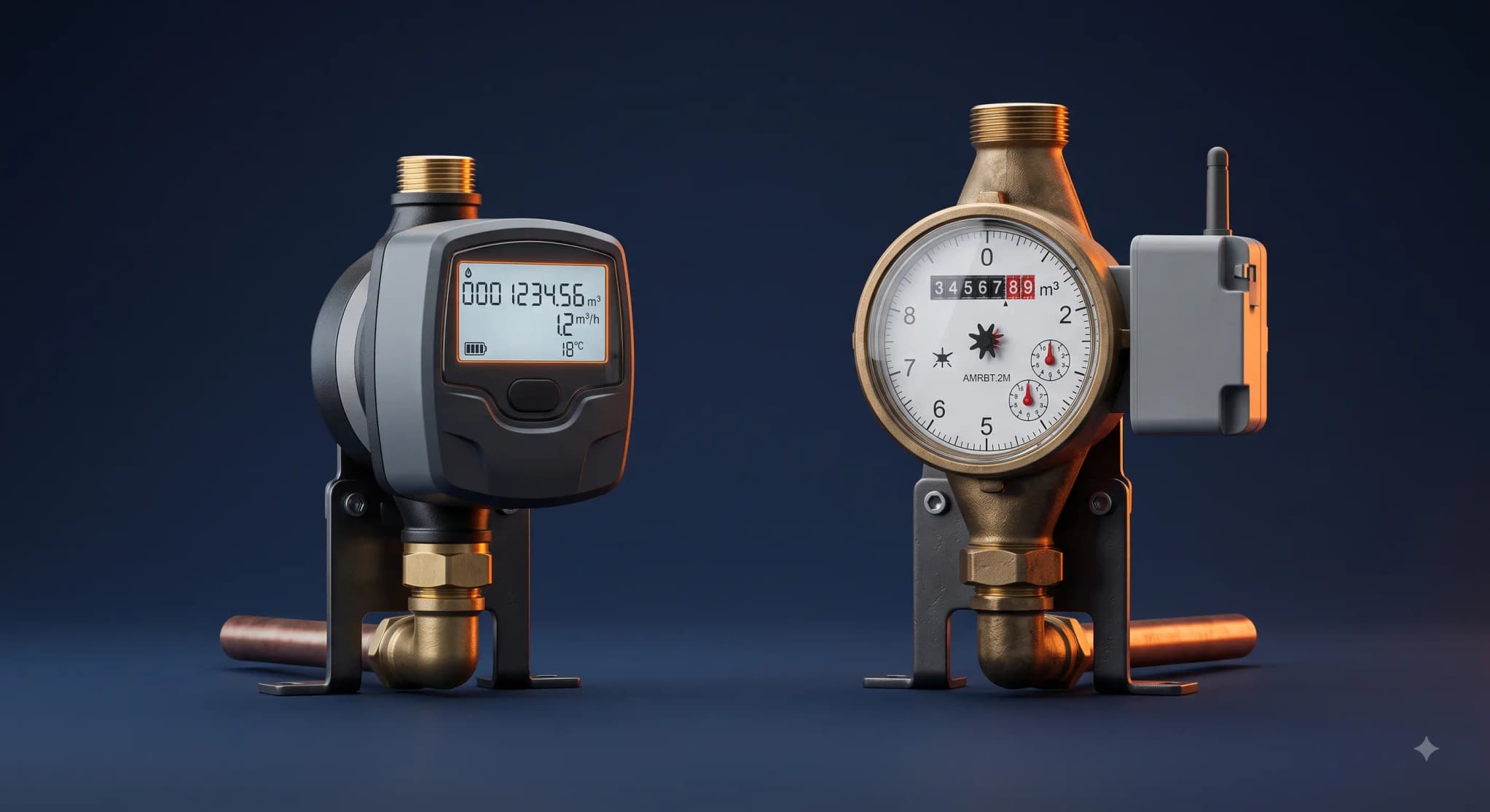
Ultrasonic vs AMR Water Meters: Which One Fits Your Network?
Accuracy, maintenance, communication, and cost — how the two technologies actually differ, and how to pick per application rather than per vendor.
Read the guide →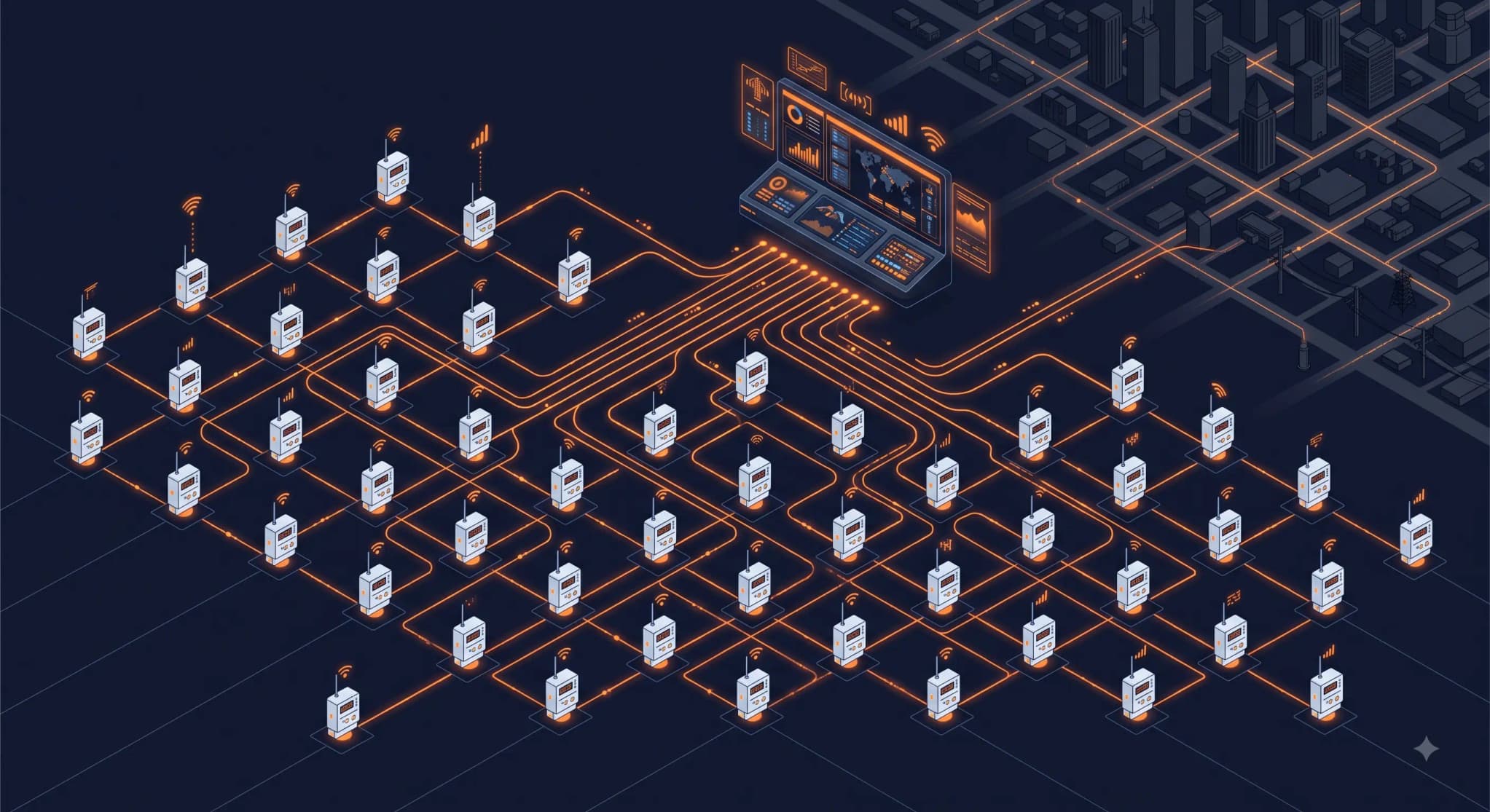
What is Advanced Metering Infrastructure (AMI)? A Complete Guide
AMI is four layers, not a product: meters, the communication network, the head end system, and meter data management. Here is what each one does.
Read the guide →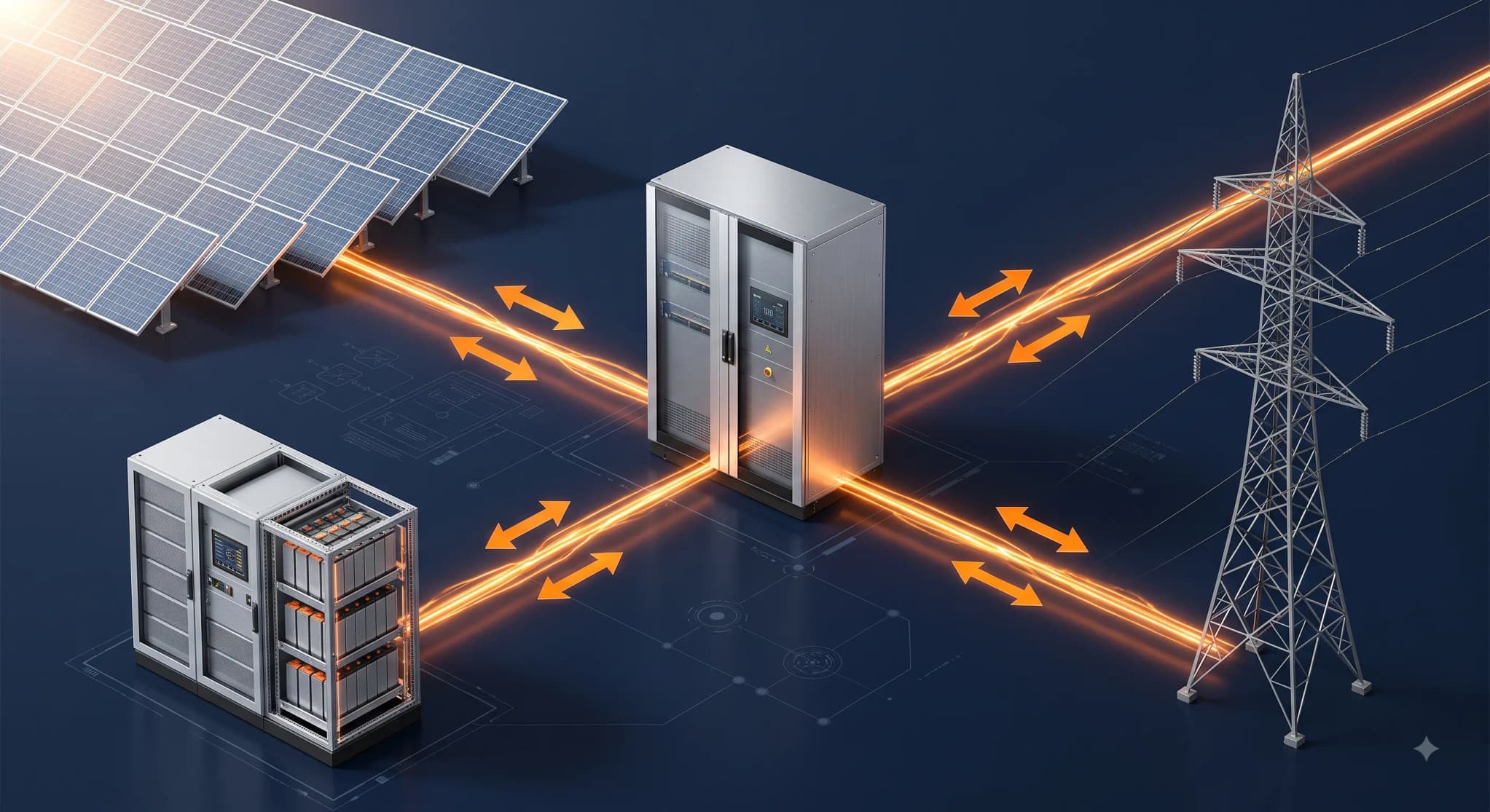
Power Conversion System (PCS) Explained: 30kW to 2.5MW
The control point of a storage system: what a PCS does, why grid-forming matters, and how a modular design scales from kilowatts to megawatts.
Read the guide →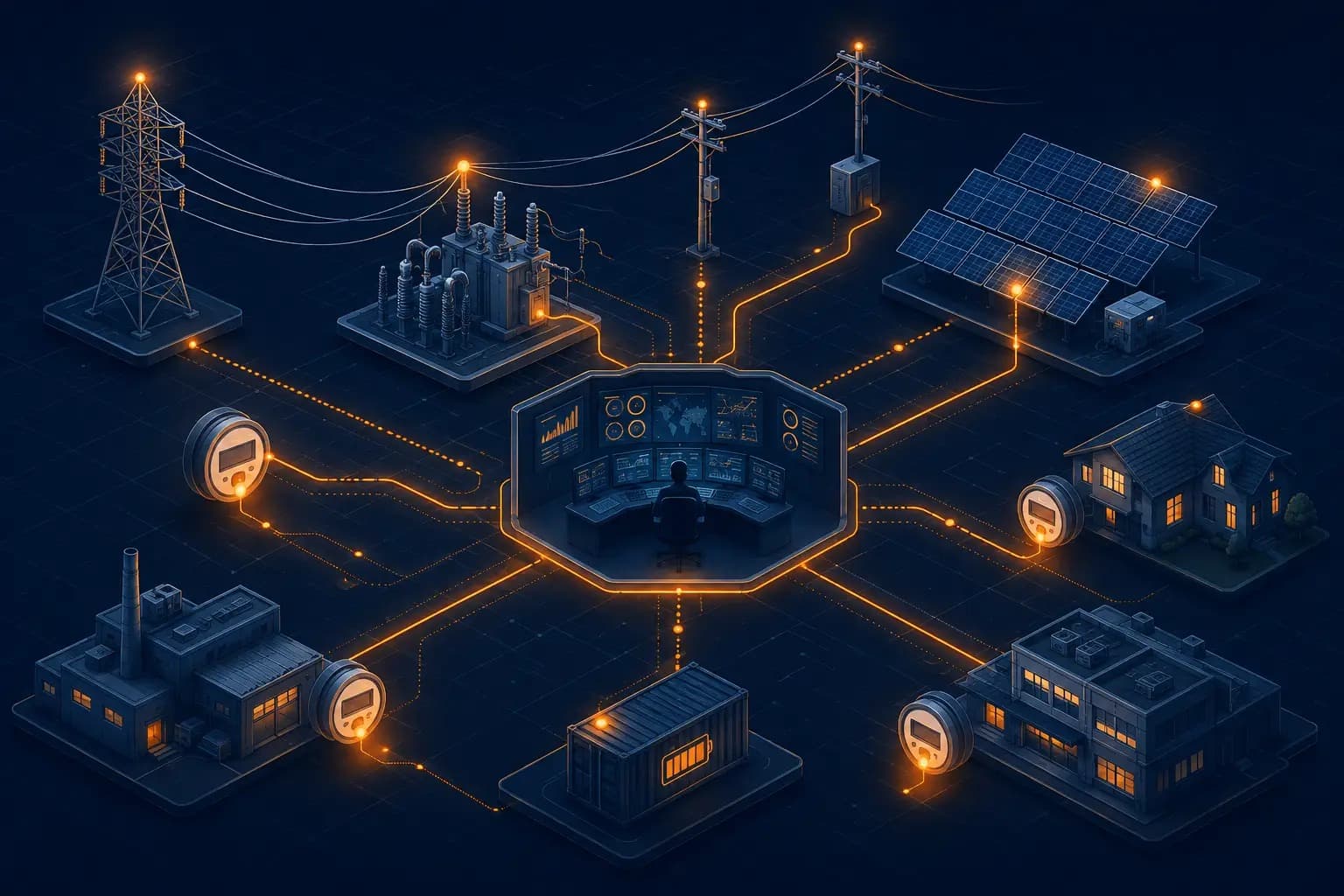
What is a Smart Grid? Components and How It Works
A smart grid adds two-way data flow to the network, so utilities can see, measure, and control power in real time. Here are the layers that make a grid smart.
Read the guide →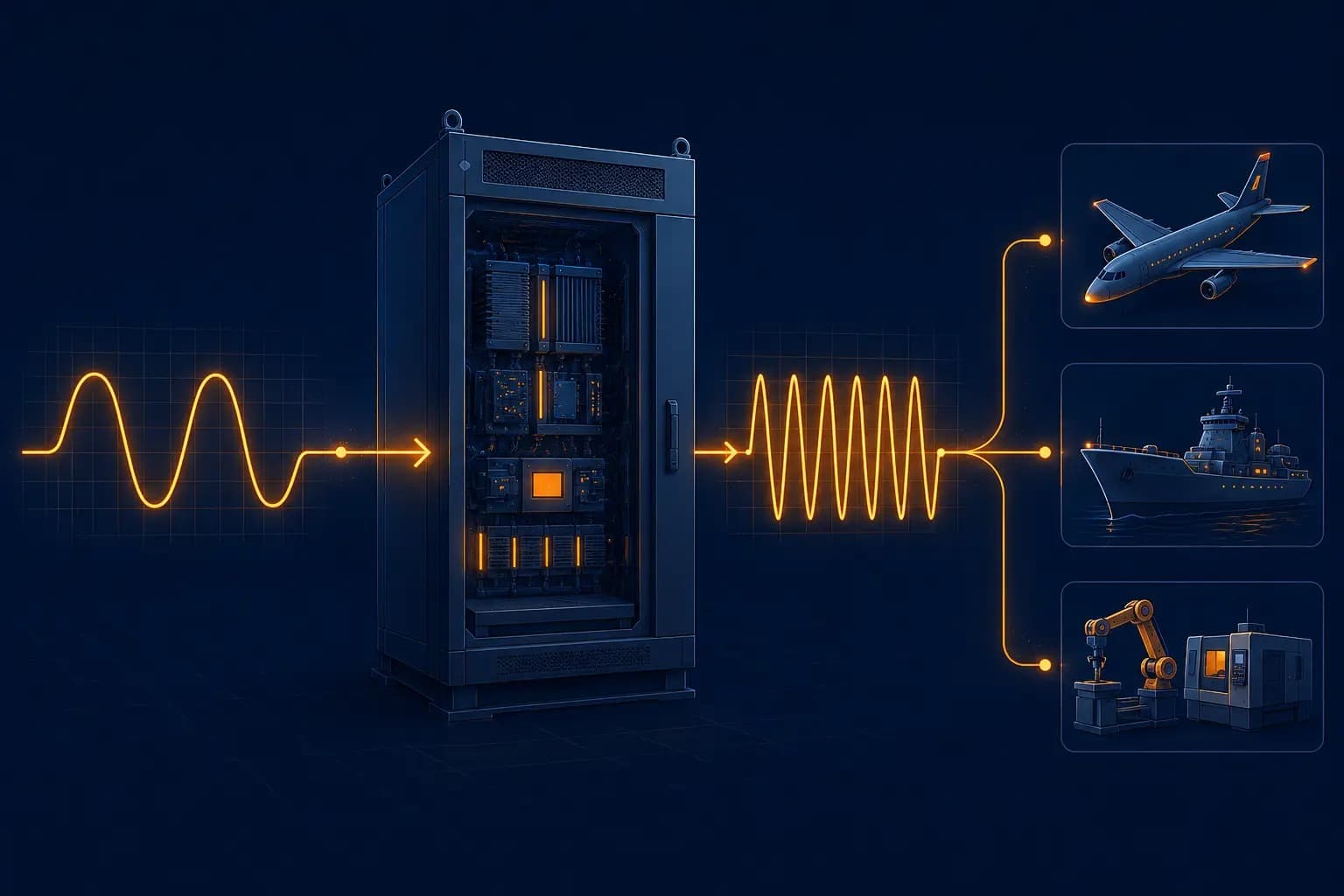
What is a Static Frequency Converter? Uses and Types
An SFC changes power from one frequency to another with no moving parts — 50 to 60 Hz for exported machinery, or mains to 400 Hz for aircraft ground power.
Read the guide →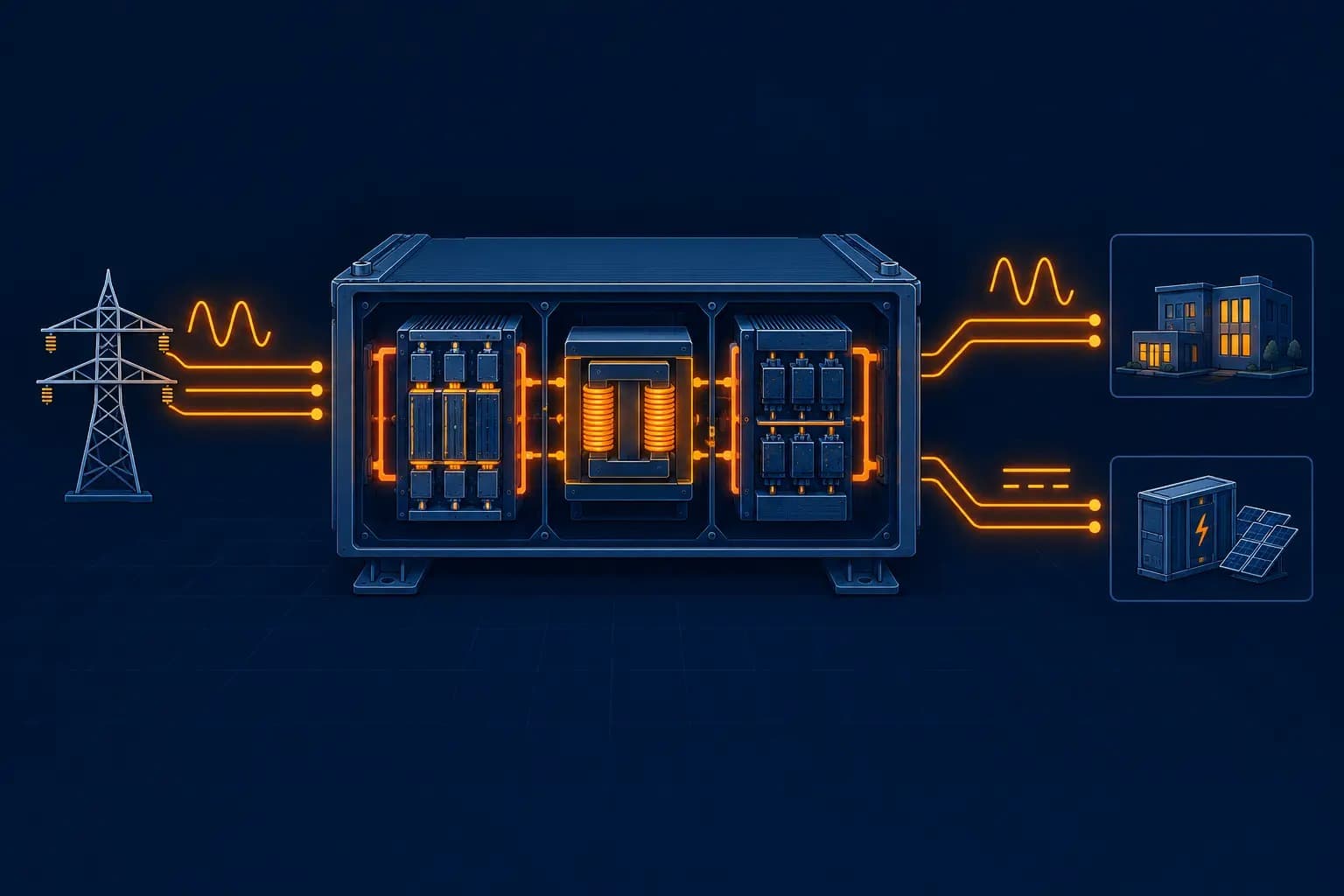
What is a Solid State Transformer (SST)?
An SST does a transformer's job with power electronics instead of an iron core — smaller, regulated, and able to hand a DC bus straight to storage and EV charging.
Read the guide →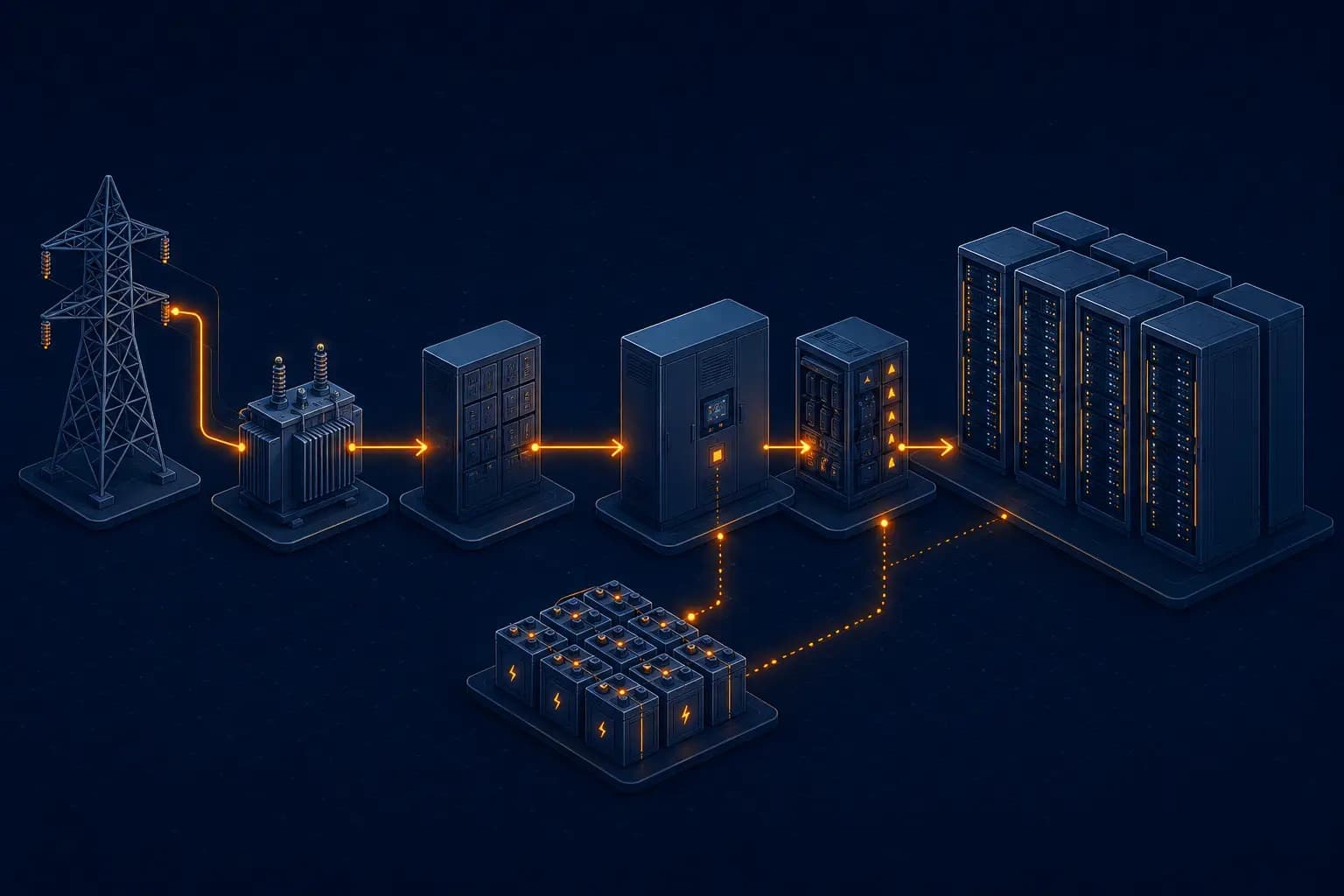
Data Centre Power Infrastructure: UPS and Conversion Explained
Clean, uninterrupted, high-density power to the rack: online double-conversion UPS, N+1 redundancy, and the conversion layer where data centre reliability is won.
Read the guide →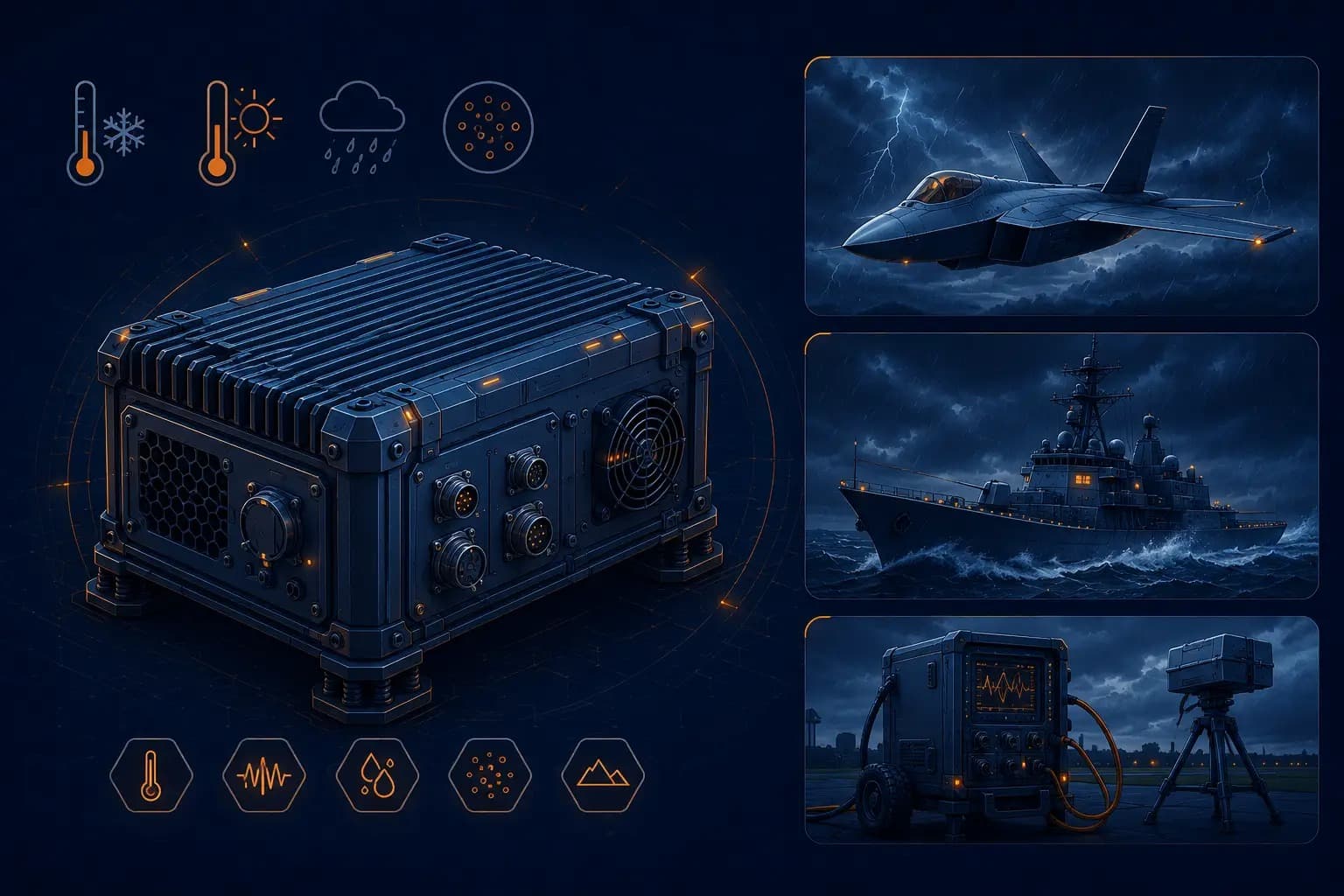
Aerospace Power Supply: Requirements and Design
Shock, vibration, altitude, 400 Hz, and MIL-STD qualification. What separates an aerospace power supply from an ordinary industrial one.
Read the guide →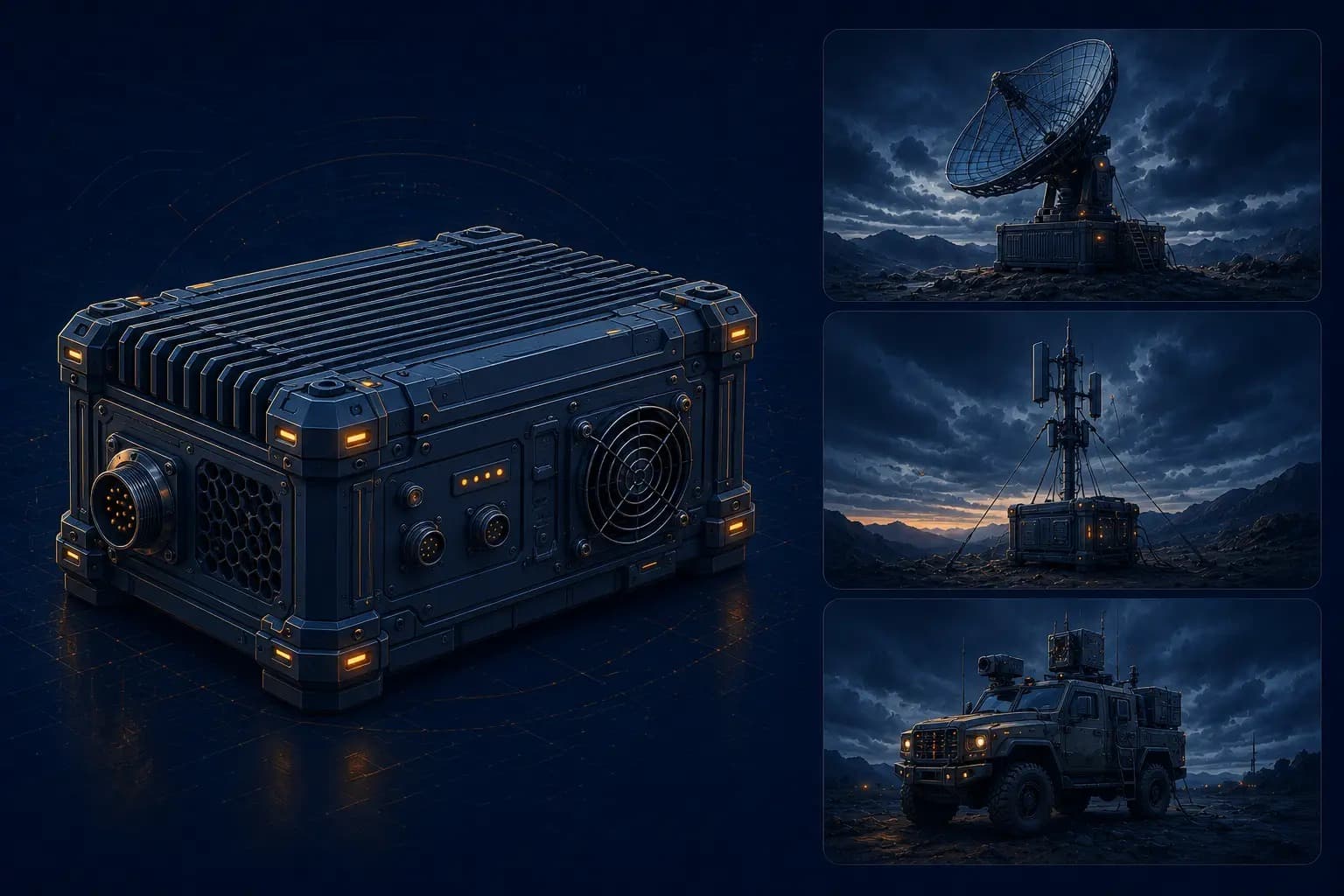
Defence Power Supply: Ruggedized Power for Mission-Critical Systems
Radar, tactical comms, and electronic warfare cannot lose power at a decisive moment. What ruggedized, MIL-STD-qualified defence power design actually involves.
Read the guide →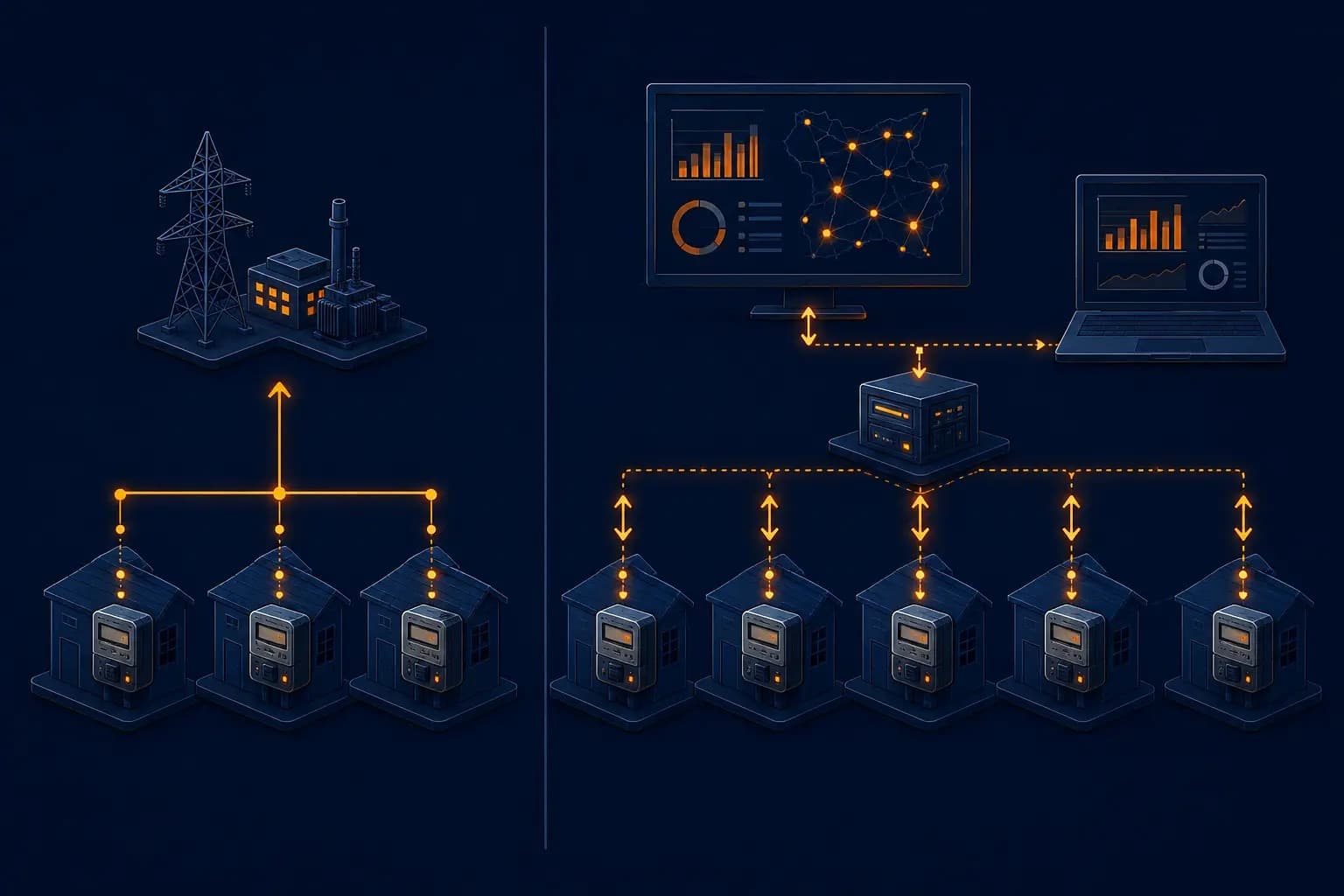
AMR vs AMI: What's the Difference?
The core difference is direction. AMR reads the meter. AMI reads and controls it — and that one distinction drives cost, capability, and everything after.
Read the guide →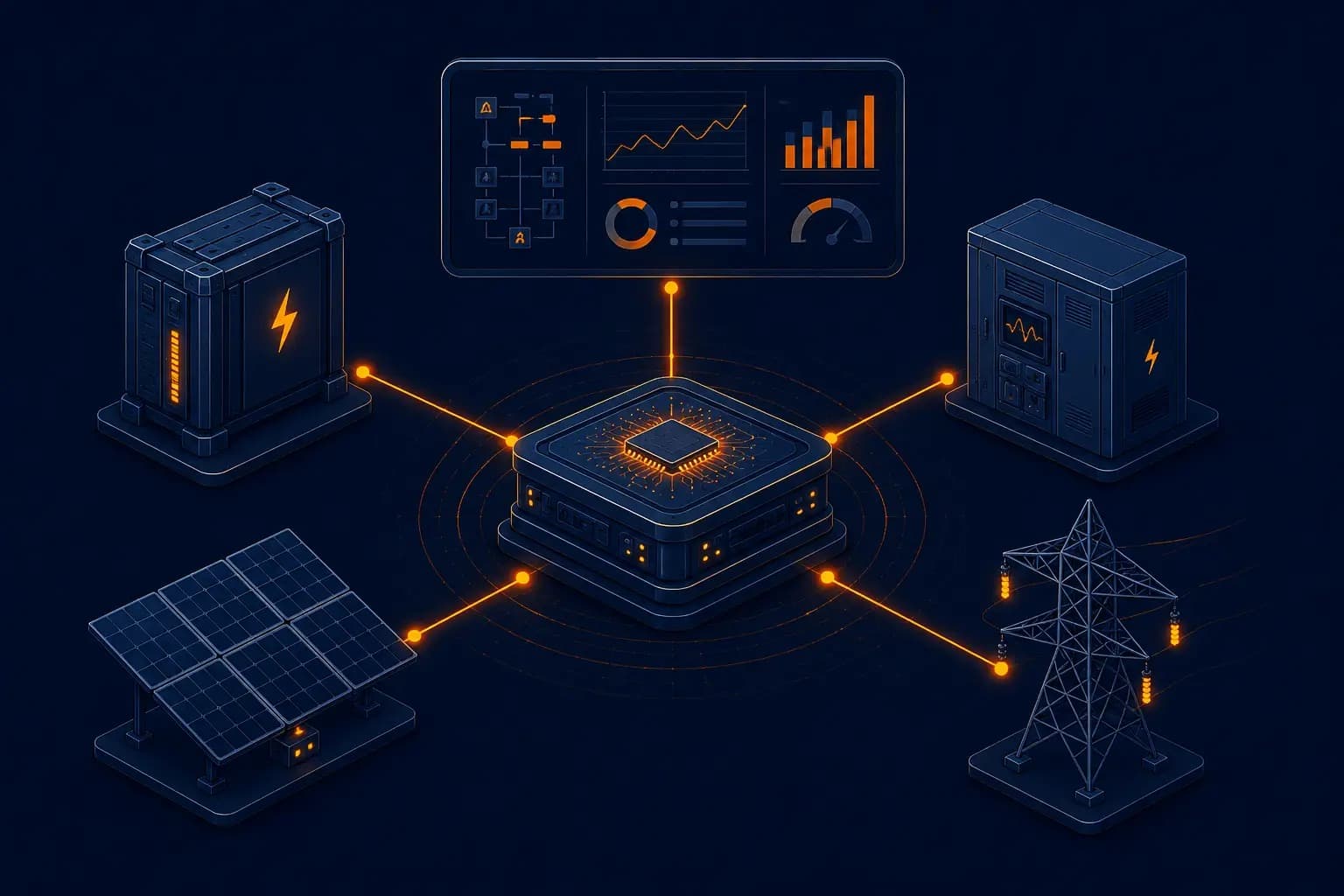
What is an Energy Management System (EMS)?
The battery stores, the converter moves, and the EMS decides. How the decision-making layer turns storage capacity into a dispatchable asset.
Read the guide →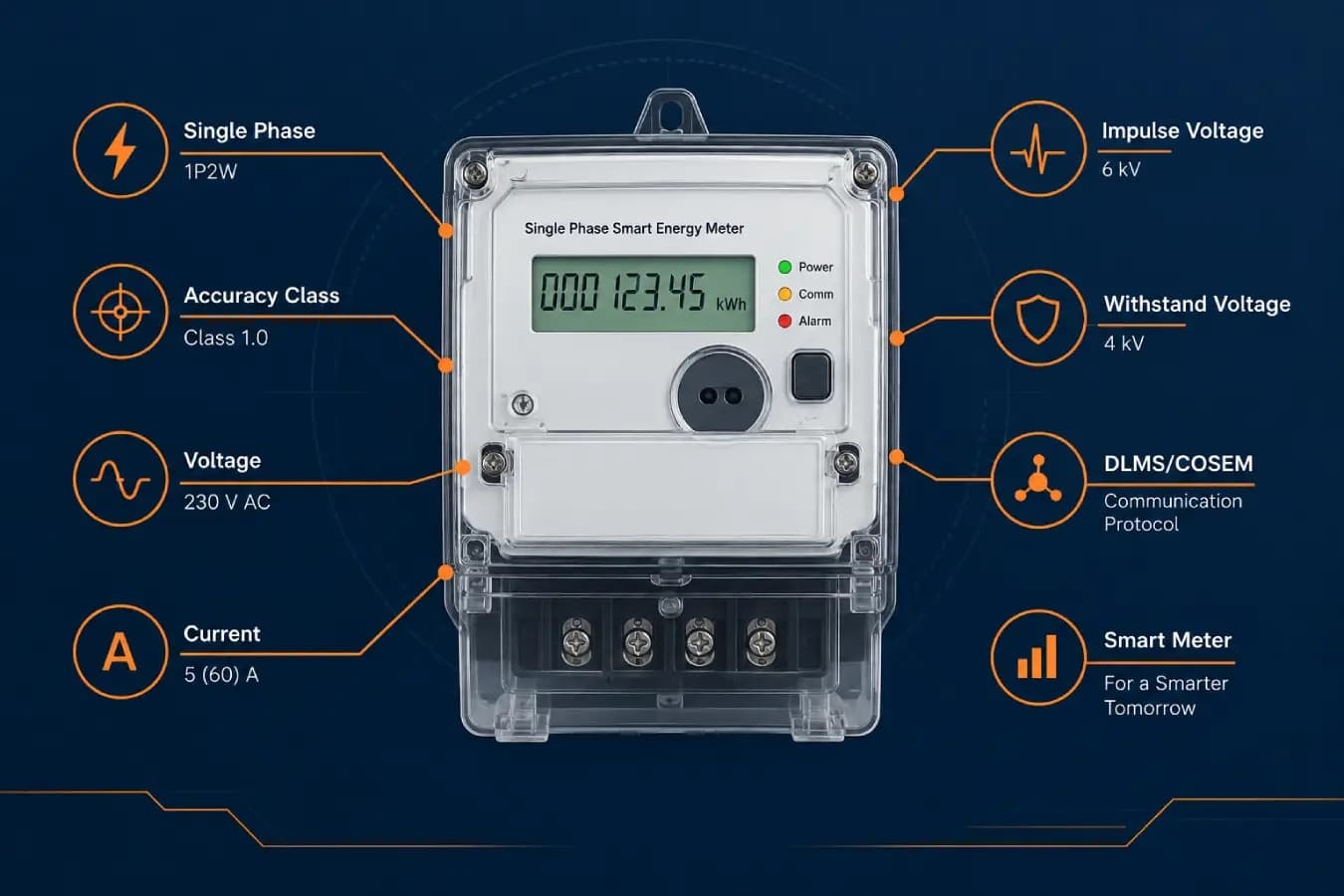
Smart Energy Meter Specifications: A Complete Guide
The core specifications of a smart energy meter are its accuracy class, voltage and current ratings, frequency, surge and impulse resistance, magnetic immunity, communication protocol, and tamper detection. Together these define how accurately the meter measures energy, how well it survives real-world electrical conditions, and how it connects into a utility's network.
Read the guide →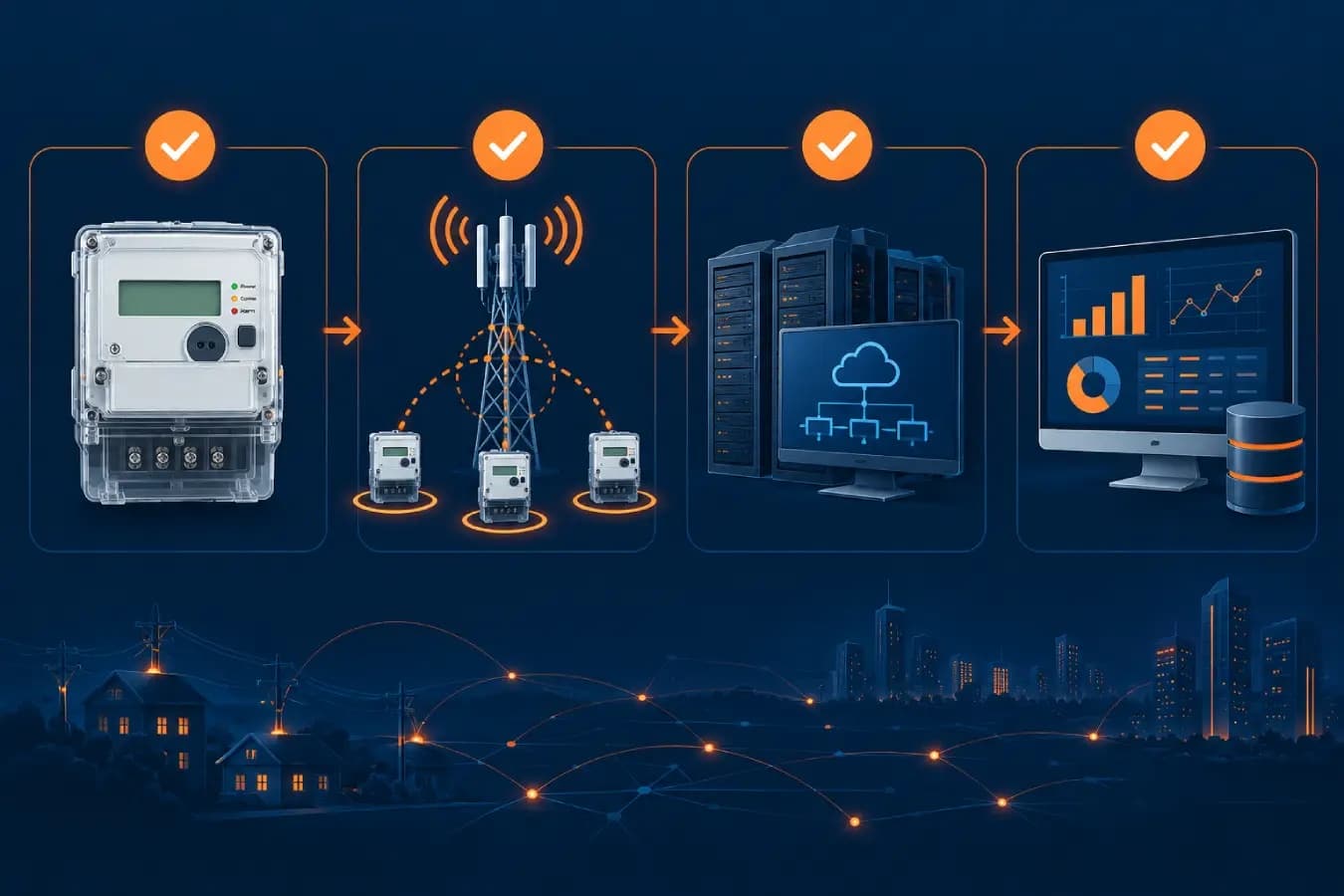
How to Choose an AMI System: A Utility Buyer's Guide
A practical AMI evaluation checklist covering smart meters, communication, HES, MDMS, interoperability, scalability, and vendor support.
Read the guide →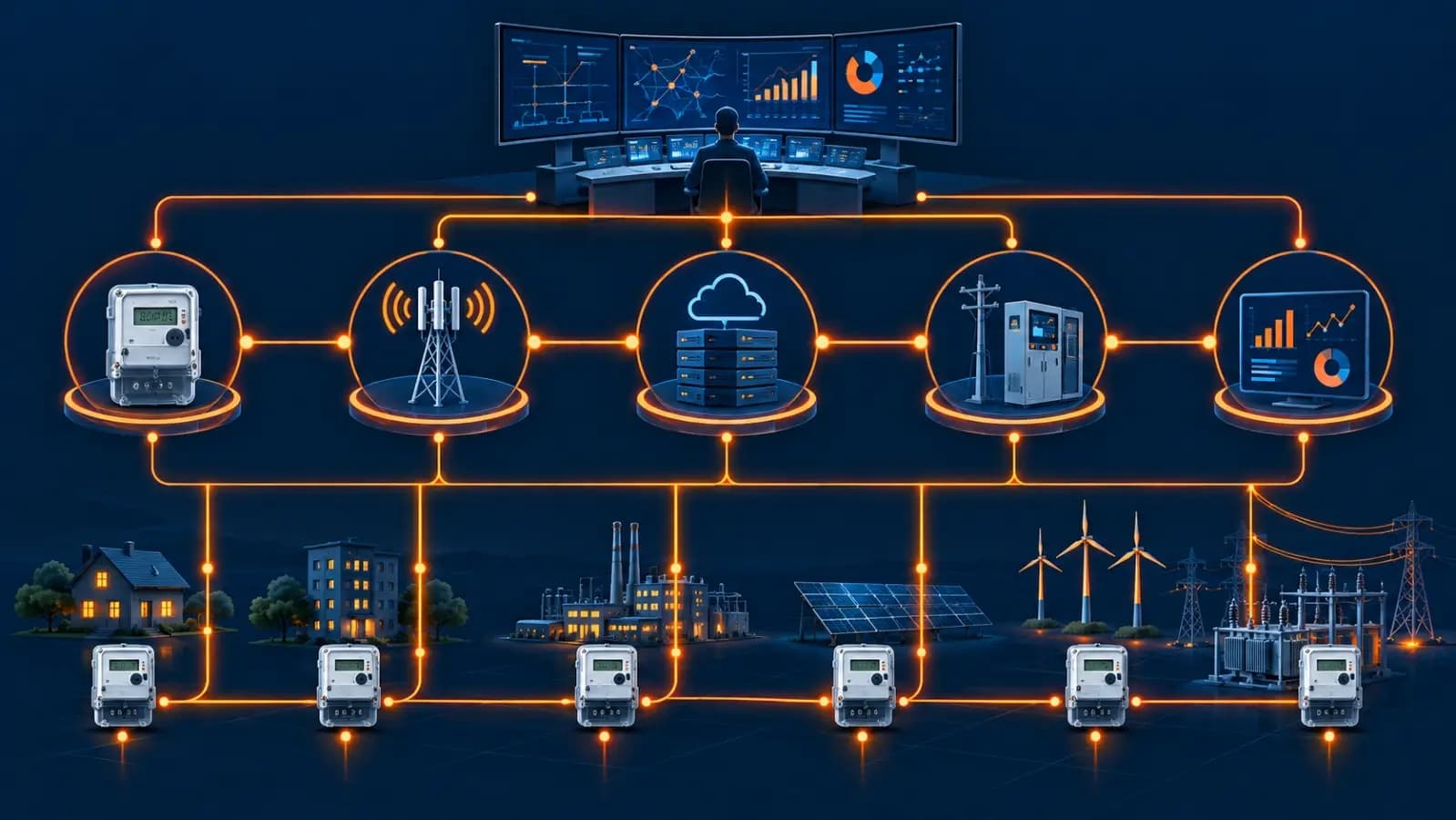
The Key Components of a Smart Grid
The five layers that turn a one-way electricity network into a measurable, connected, automated, and intelligent smart grid.
Read the guide →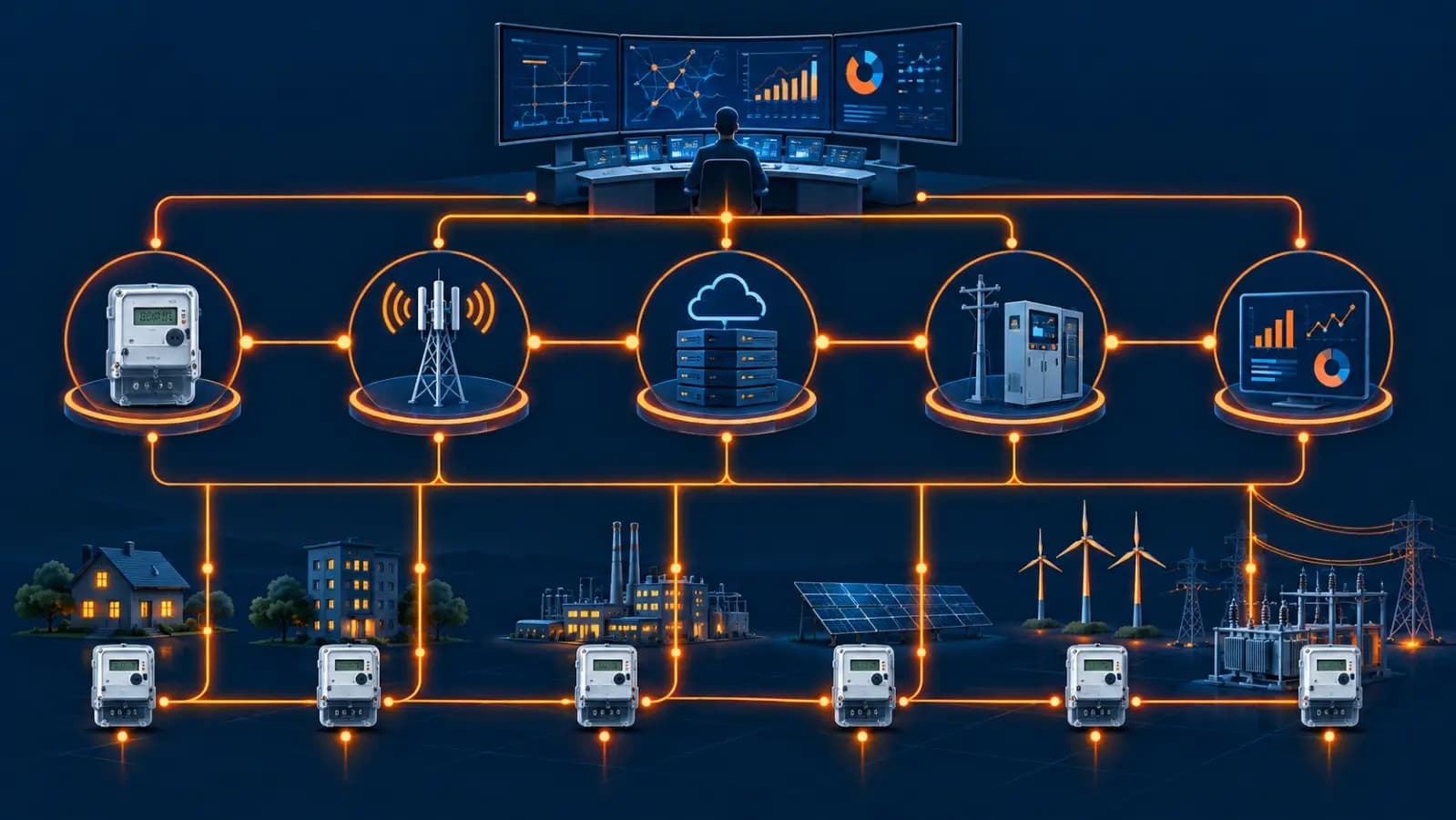
Solid State Transformer vs Conventional Transformer
The practical differences between passive iron-core transformers and power-electronic SSTs, including when the extra control and DC capability justify the change.
Read the guide →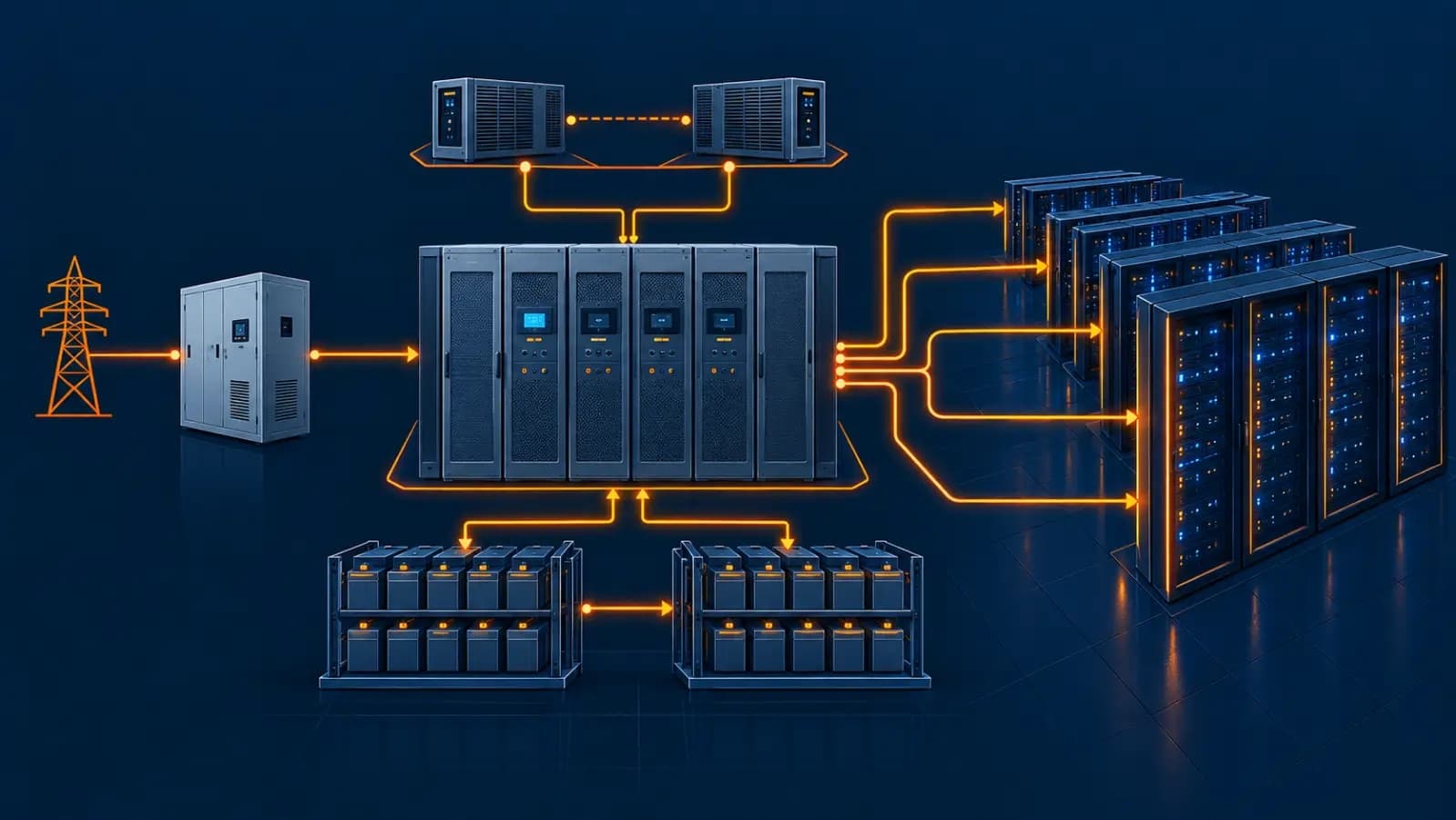
Data Centre UPS: Types and How to Choose
Why online double-conversion is the data-centre standard, how N+1 and 2N redundancy work, and how to choose a scalable UPS architecture.
Read the guide →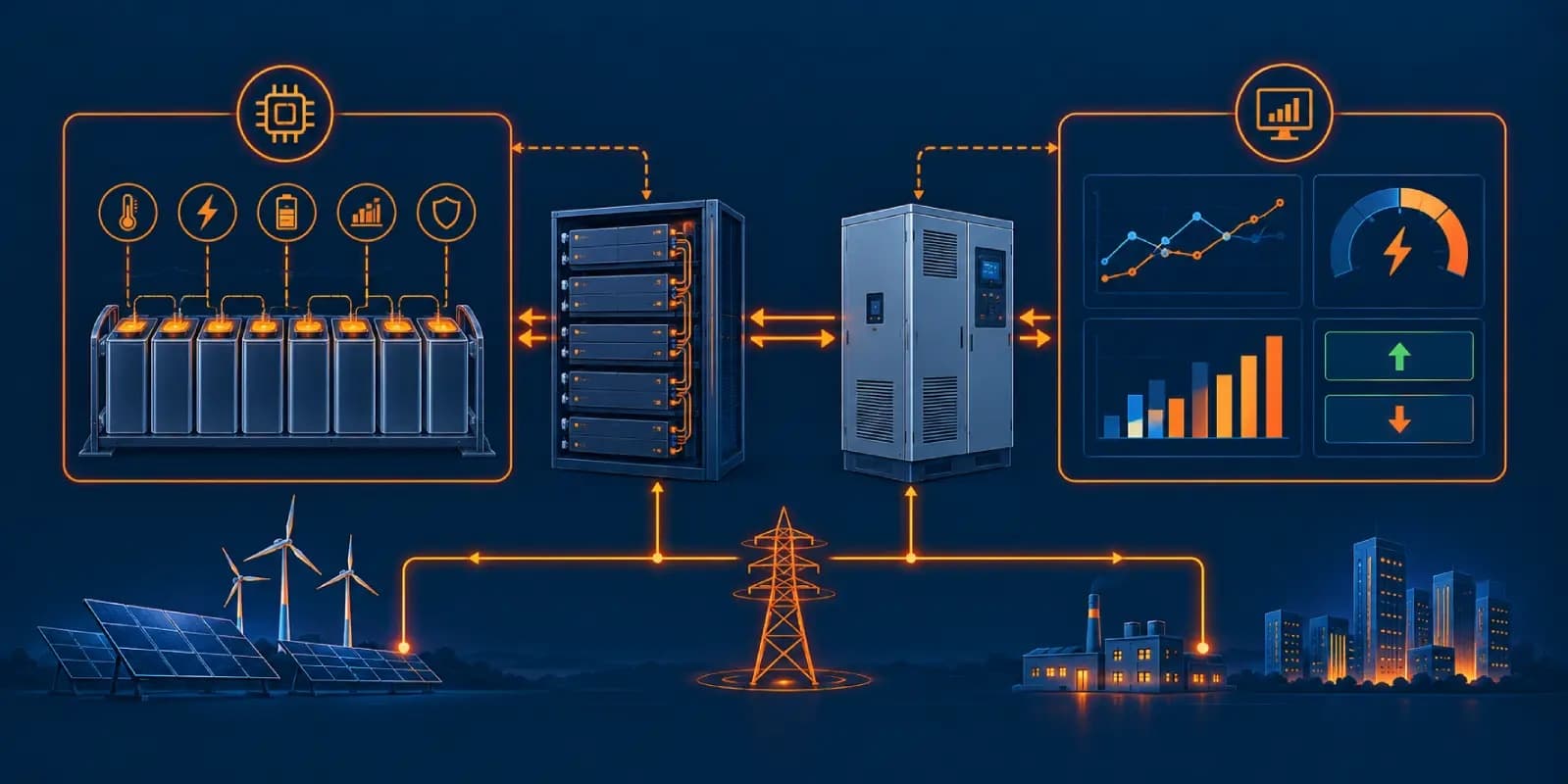
EMS vs BMS: What's the Difference?
The BMS protects the battery cells; the EMS makes decisions for the whole energy system. Both are essential, but they solve different problems.
Read the guide →.webp&w=2045&q=75)
What is RDSS and IS 16444? A Smart Meter Compliance Guide
RDSS is the national scheme driving smart prepaid metering across India, while IS 16444 is the standard a meter must meet to qualify for it.
Read the guide →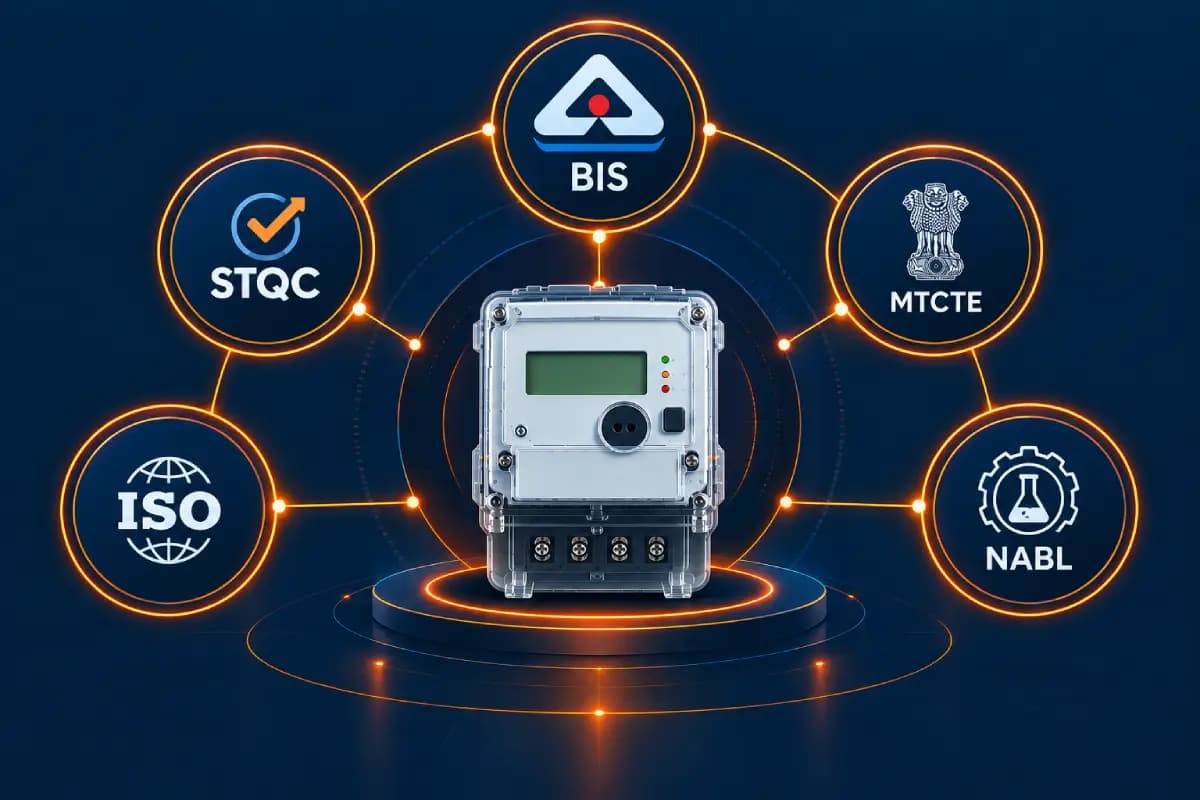
Smart Energy Meter Certifications Explained
Certifications show that a smart meter has been independently tested for accuracy, functionality, safety, security, and reliable deployment.
Read the guide →.webp&w=2045&q=75)
Prepaid vs Postpaid Smart Meters: What's the Difference?
Prepaid meters collect before consumption; postpaid meters bill after the cycle. Both can be smart, remotely managed, and support modern tariffs.
Read the guide →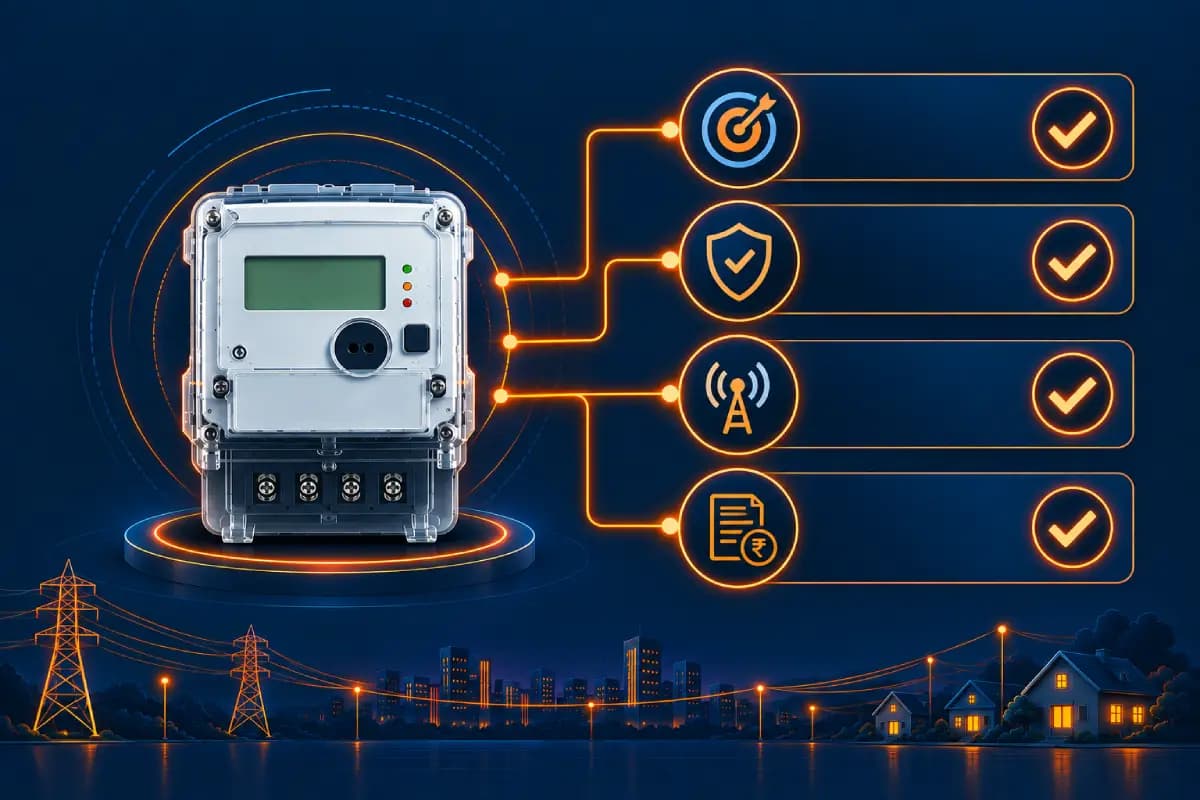
How to Choose a Smart Meter for a Utility
Choose a utility smart meter by evaluating accuracy, compliance, communication, billing support, tamper resistance, and the manufacturer behind it.
Read the guide →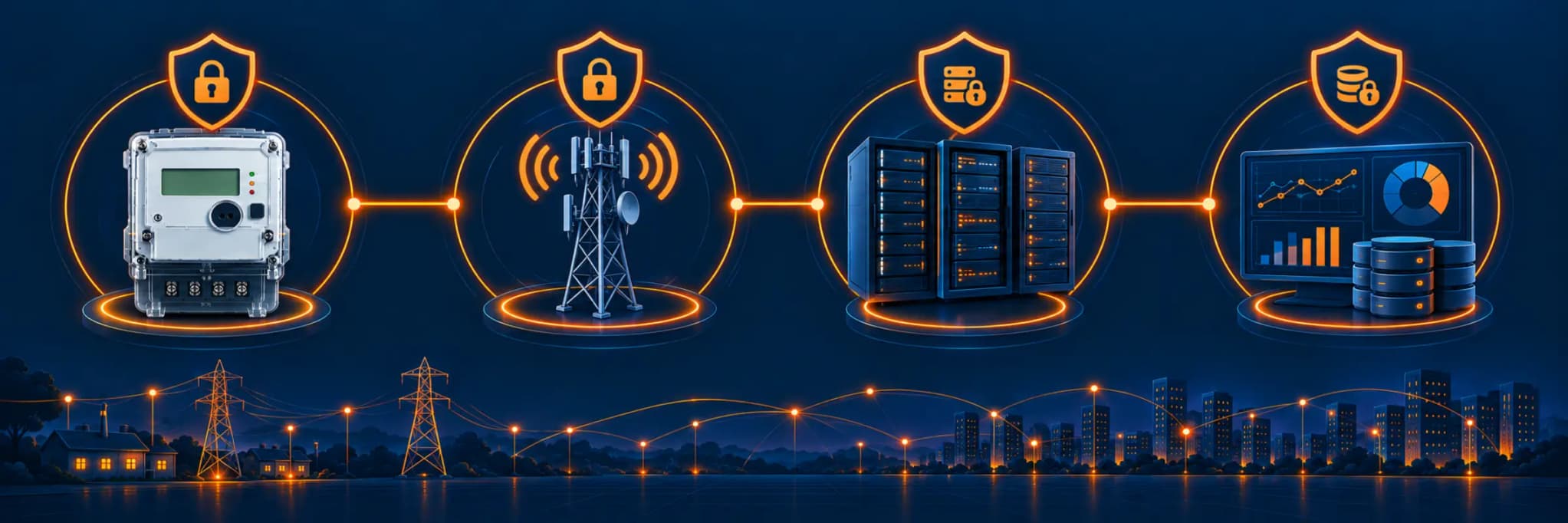
AMI Security: How Smart Meter Data Is Protected
AMI security is end-to-end protection across the meter, communication network, software systems, users, and data that connect a modern utility.
Read the guide →