What is a Static Frequency Converter? Uses and Types
A clear guide to static frequency converters: what they are, how 50, 60, and 400 Hz conversion works, their main applications, and how Enerzolve builds them.
Enerzolve Smart Technologies·
What is a static frequency converter?
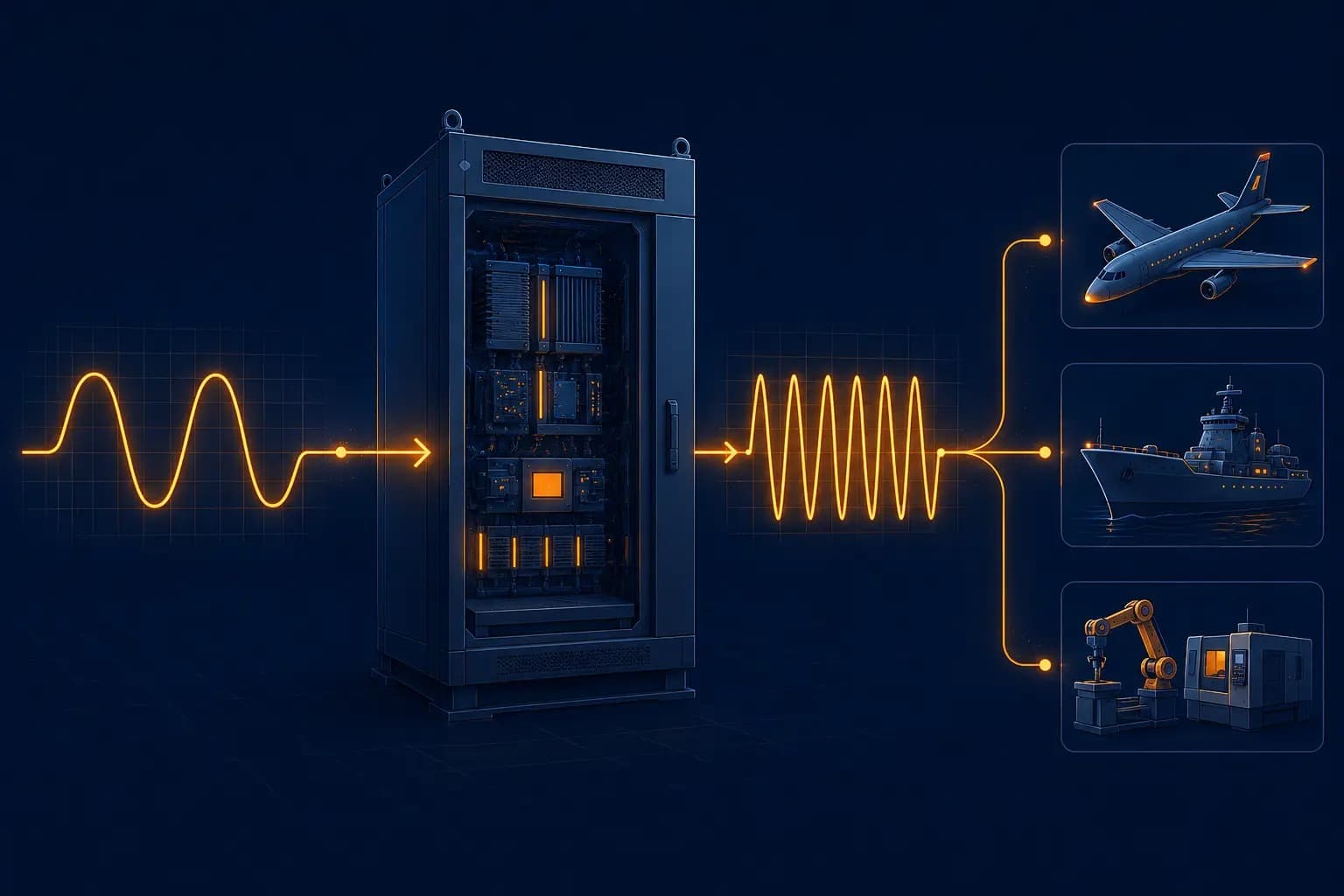
A static frequency converter (SFC) is a solid-state device that changes electrical power from one frequency to another, for example from 50 Hz to 60 Hz, or from standard mains to 400 Hz. “Static” means it does this entirely through power electronics, with no rotating machinery, unlike the older motor-generator sets it replaces.
That distinction matters. By converting frequency electronically, an SFC delivers stable, precise, maintenance-free power in a fraction of the size and with far higher efficiency. This guide explains how it works, the common types, where it is used, and what to look for.
How a static frequency converter works
An SFC converts power in two stages. First it rectifies the incoming AC into DC. Then it inverts that DC back into AC at the frequency, voltage, and waveform you need. Because the output is rebuilt electronically rather than tied to the input, the converter can produce a clean, tightly regulated supply regardless of what the source frequency was.
This two-stage approach is why an SFC also improves power quality. The output is isolated from disturbances on the input side, so sensitive equipment receives a stable waveform even when the source is not perfect.
Common frequency conversions
Static frequency converters are defined by the conversion they perform:
50 Hz to 60 Hz (and 60 Hz to 50 Hz). The most common industrial need, used to run equipment built for one regional standard in a country that uses the other. Essential for testing export equipment and for operating imported machinery.
Mains to 400 Hz. A specialised conversion. 400 Hz is the standard for aircraft and much aerospace and defence equipment, because higher frequency allows lighter, smaller transformers and motors. Ground power for aircraft runs on 400 Hz.
Variable frequency output. Some converters produce an adjustable output frequency for test benches and specialised industrial processes.
Applications
Static frequency converters show up wherever equipment needs a frequency the local grid does not supply:
Aerospace ground power. Supplying 400 Hz power to parked aircraft for maintenance, testing, and servicing without running the aircraft's own engines.
Marine and shipboard systems. Ships and ports often need 60 Hz supply in 50 Hz regions, or vice versa, to run onboard systems and shore-to-ship power.
Testing and manufacturing. Manufacturers exporting equipment need to test it at the destination country's frequency before shipping. An SFC provides that frequency in the factory.
Mining and heavy fleet operations. Frequency conversion for specialised mining systems and equipment that runs on non-standard supply.
Types of static frequency converter
Beyond the conversion they perform, SFCs are grouped by design. Solid-state converters using modern power electronics are the standard today, offering high efficiency, precise regulation, and no moving parts to wear or service. This is a decisive advantage over legacy motor-generator sets, which were large, loud, less efficient, and needed regular mechanical maintenance.
Converters also differ by whether they provide galvanic isolation, their power rating, and whether the output frequency is fixed or adjustable. The right choice depends on the load, the environment, and how critical clean, uninterrupted power is.
Static frequency converters from Enerzolve
Enerzolve builds static frequency converters as part of its broader power electronics portfolio, engineered for demanding applications where reliability is non-negotiable.
The converters deliver solid-state 50, 60, and 400 Hz conversion for fleet operations, mining systems, and aerospace ground power, built to be stable, efficient, and maintenance-free. They are engineered on the same modular, high-density power conversion platform Enerzolve uses across its product lines, and manufactured in India at a facility set up for aerospace and defence-grade work.
If you need frequency conversion for aerospace ground power, marine systems, test benches, or industrial fleets, talk to our engineering team about your requirement.
The takeaway
A static frequency converter changes power from one frequency to another using solid-state electronics, with no moving parts. Whether it is 50 Hz to 60 Hz for exported machinery or mains to 400 Hz for aircraft ground power, it delivers a clean, precise, maintenance-free supply that older motor-generator sets cannot match. The right converter depends on the conversion you need, the load, and how critical power quality is to the application.
Frequently asked questions
It converts electrical power from one frequency to another, such as 50 Hz to 60 Hz or mains to 400 Hz. Common uses include aerospace ground power for aircraft, marine and shipboard systems, testing exported equipment at a destination frequency, and mining and industrial fleets.
A static frequency converter uses solid-state power electronics with no moving parts. A rotary converter uses a motor-generator set with rotating machinery. Static converters are smaller, more efficient, more precise, and maintenance-free, which is why they have largely replaced rotary units.
Higher frequency allows transformers and motors to be lighter and smaller, which matters greatly in aircraft. 400 Hz is the standard for aircraft electrical systems, so ground power equipment must supply 400 Hz to service parked aircraft.
Yes. Because the output is rebuilt electronically, a static frequency converter can regulate voltage along with frequency, delivering a stable, isolated supply that also improves power quality for sensitive loads.
Key factors are the input and output frequencies, the power rating of the load, whether you need a fixed or adjustable output frequency, whether galvanic isolation is required, and the operating environment, since aerospace, marine, and mining applications place different demands on ruggedness and reliability.
Keep reading
What is a BESS? Battery Energy Storage Systems Explained
A BESS is a system of systems. The BMS protects the cells, the PCS converts the power, and the EMS decides what the whole thing should do.
HES vs MDMS: How the AMI Software Layer Works
The HES talks to the meters, the MDMS makes sense of the data. One collects, the other perfects — and a serious AMI rollout needs both.
Grid-Forming vs Grid-Following Inverters (What Grid-Forming Means)
A grid-following inverter is a passenger. A grid-forming inverter can be the driver — and as conventional generation retires, that difference matters more every year.
Ultrasonic vs AMR Water Meters: Which One Fits Your Network?
Accuracy, maintenance, communication, and cost — how the two technologies actually differ, and how to pick per application rather than per vendor.
Planning a metering or power conversion program?
Talk to the engineering team about specifications, standards, and deployment.
Contact Enerzolve